What If I Regret Leaving My Marriage?
There's a quiet question that surfaces when you start thinking about ending a marriage.
What if I look back one day and wish I had stayed?
It doesn't usually show up during dramatic moments. Rather the ordinary ones.
Driving home. Standing at the sink. Folding laundry.
Sitting in silence after everyone else has gone to bed.
When I was in that season, I wasn't in a crisis that was obvious.
I was functioning.
That's what made it so confusing.
From the outside, our life looked intact. We had routines. We had a child. We had shared history. Nothing about it looked like something you dismantle.
But inside, I had been compromising in ways I hadn't fully admitted to myself.
Not the ones that showed up to everyone but me, but the small quiet erosions that slowly held me back from finally acknowledging what it is I wanted from my marriage.
Lowering the bar for what felt acceptable. Explaining away tension. Telling myself I was just tired. Telling myself this is what long-term commitment looks like.
Over time, I got very good at surviving.
And in surviving, I slowly began disappearing.
The Numbness I Didn't Notice
I didn't feel constantly upset.
I felt flat.
Voices could rise and I would stay steady. Disagreements would happen and I would manage them. I told myself I was being mature. I told myself I wasn't reactive.
But what I was actually doing was numbing.
It didn't feel dramatic. It felt responsible.
Until the day I realized how far that numbness had gone.
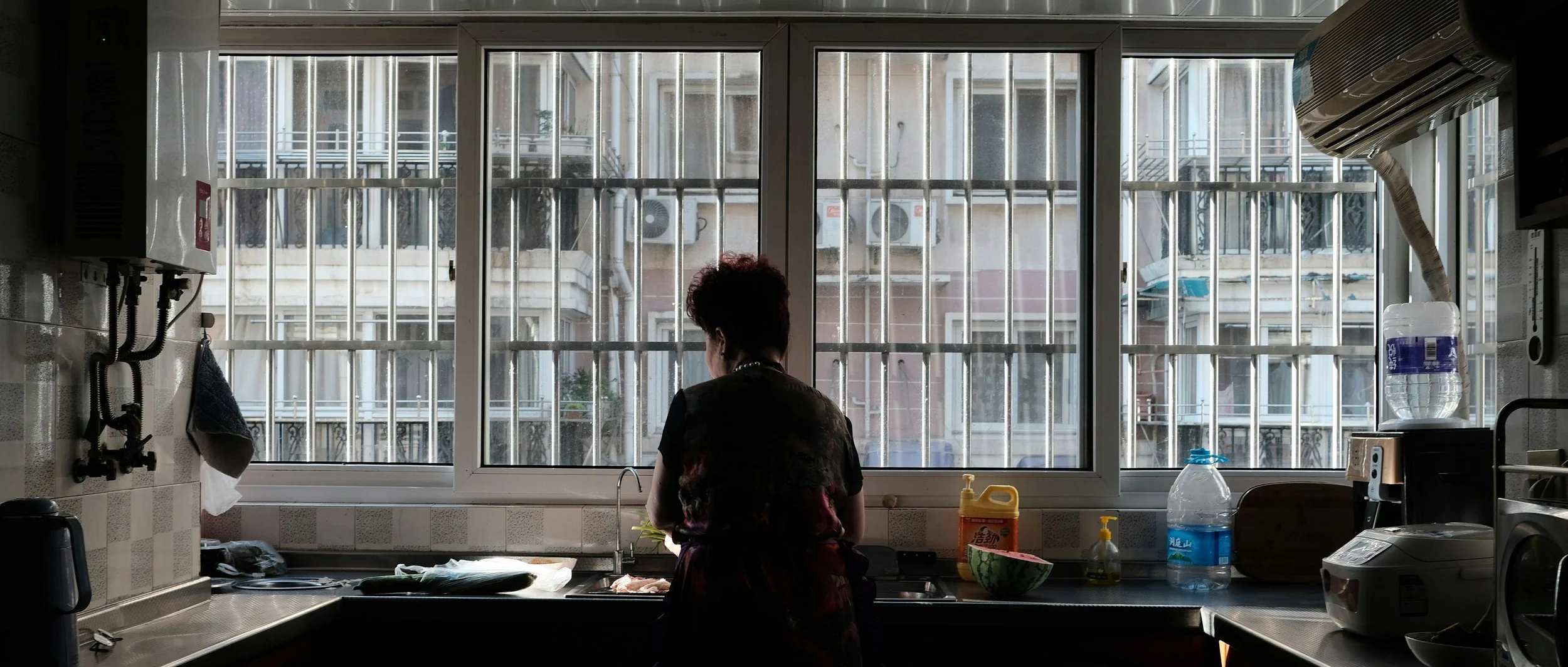
It was an ordinary evening after dinner. I was standing at the sink doing dishes. My daughter was two. My husband was upset and raising his voice.
And I barely registered it.
That's the part that stayed with me.
Not the volume.
The fact that I had adapted to it.
Then my daughter spoke. She reacted immediately, the way toddlers do when something doesn't feel right.
And I remember the split second of clarity that followed.
She was responding to something I had trained myself not to feel.
I could absorb it. She couldn't. And somehow that was the part that finally got through to me.
In that moment, I saw it clearly. What had become normal to me wasn't normal. I had been compromising in ways that were quietly shaping me. I had been calling numbness strength. I had been telling myself I was steady when I was actually shrinking.
That moment didn't make the decision for me.
But it did take away my ability to selectively ignore this problem any further.
"It's Not Bad Enough"
For a long time, that was the phrase that kept me in place.
It's not bad enough.
There wasn't constant chaos. There wasn't daily conflict. There were good moments. There were functional days. He never hit me.
And because of that, I minimized what I was feeling.
What I didn't understand at the time is that a relationship doesn't have to be explosive to affect the quality of your life. You don't have to be in crisis to be impacted.
I wasn't falling apart.
But I was braced most days.
And when you live braced for long enough, it becomes your baseline. You forget what relaxed feels like. You forget what it's like to speak without calculating your tone. You forget what ease feels like in your own home.
That was the part I had been dismissing.
It wasn't catastrophic.
But it wasn't neutral either.
The Fear of Looking Back
Even after I saw things more clearly, the fear didn't disappear.
I still worried about dismantling a life that, on paper, looked fine. I still questioned whether I was expecting too much. I still wondered if I would someday look back and wish I had just tolerated more.
There is real weight in leaving the person you love and the life you built with him.
You don't just walk away from him. You walk away from shared routines, familiar holidays, a version of the future you once believed in.
Of course that feels heavy.
But I also had to face something equally real.
Staying would cost something too.
Staying meant continuing to compromise in ways that were slowly erasing parts of me. Staying meant teaching myself that tension was just the price of commitment. Staying meant teaching my daughter that this is what a normal relationship looks like.
Leaving would cost familiarity.
Staying was costing me presence.
That distinction mattered more than I expected it to.

What Changed
I didn't wake up one day certain.
I just stopped being able to look away from what I already knew.
The body keeps track, even when you don't want it to. Mine had been keeping one for a long time. The bracing. The tone calculation. The way I could feel myself getting smaller in my own kitchen and call it being easygoing.
At some point, I stopped being able to override that.
Not because something dramatic happened, but because I had run out of ways to talk myself out of what I was feeling.
I wasn't certain about what came next, but I was certain that I couldn't keep disappearing.
If You're Here Right Now
If you're afraid of looking back one day and wishing you had stayed, that tells me you take this seriously.
It also tells me you've been carrying the weight of this question alone for a while.
You don't have to know what you're going to do.
You don't have to have it figured out by the end of this blog, or this week, or this season.
But you are allowed to stop pretending you don't feel what you feel.
You are allowed to stop calling it nothing.
You are allowed to let your shoulders drop, just for a minute, and admit that something in you has been tired for a long time.
Whatever you decide, you are not wrong for feeling what you feel.
You are not wrong for staying.
You are not wrong for leaving.
You are not wrong for not knowing yet.